-

Survey No. 270A & Plot No. 1 of Survey No. 267, Chhatha Mile, Vill: Dantali – 387350 Ta: Vaso, Dist: Kheda, Gujarat (India)
-

Survey No. 270A & Plot No. 1 of Survey No. 267, Chhatha Mile, Vill: Dantali – 387350 Ta: Vaso, Dist: Kheda, Gujarat (India)
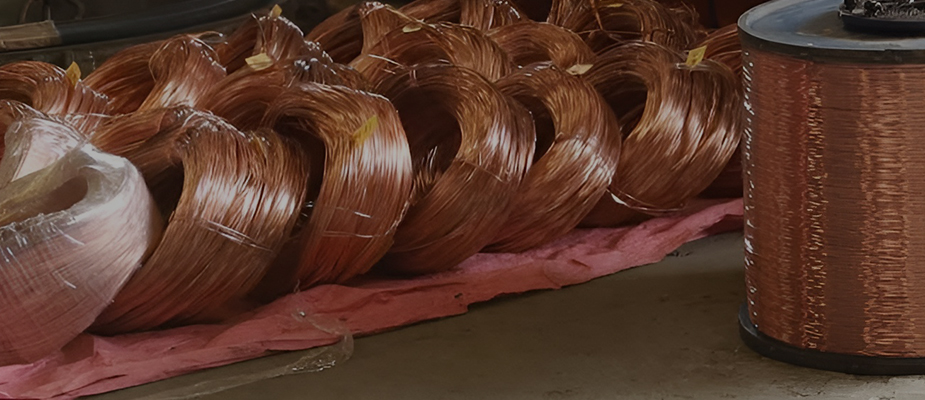
No debate ever arises about the earthing wire in the procurement meeting. Cable specifications get hammered out. Panel ratings get verified. And then someone asks about the earthing wire. “Same as last time” is a typical answer to this question.
This simple practice turns out to be a hidden source of installation failure in many cases.
About copper earthing wires: they are affordable enough to overlook and critical enough to cost someone if overlooked. Choosing an appropriate gauge of copper earthing wire when buying it from a copper earthing wire supplier in India deserves the same attention to detail as choosing a cable.
The Practice Hard to Overcome
Sizing should depend on the required fault current, on the maximum time of its operation, and on the installation conditions. That’s how it’s supposed to work. However, in reality, the following scenario repeats in many procurement meetings. The buyer takes a look at a previous purchase order, takes the gauge that worked fine then, and orders it again without any calculation or analysis of the load.
What makes this mistake hard to notice is that the “working” gauge didn’t prove itself. It was not tested by its operation. An earthing wire doesn’t show that it is undersized in its regular functioning. It reveals that during the fault, which is exactly when it shouldn’t fail.
Sunlite Recycling provides copper earthing wire from the 5 SWG to 26 SWG range, which means buyers have opportunities to choose the appropriate gauge, rather than relying on the easy solution.
Sourcing copper earthing wire for your next project?
Look through Sunlite Recycling’s copper earthing wire range, available in various sizes and specifications for industrial and electrical applications.
What Should Be Checked Instead
Refer to the electrical design of the current project. Different installations are diverse enough to make this shortcut ineffective.
Grounding of solar/wind power installation differs from grounding in the power distribution systems or on the shop floor. A gauge that serves well in one of these cases might be totally inappropriate for the other one. No such a gauge suits all these cases.
ISI marking and standards (IS/IEC/ASTM) compliance is not intended to satisfy the auditor. The compliant wire was certified to work in the required conditions. Omitting this point is equivalent to neglecting the only evidence of its ability to function.
The purity of copper affects its conductivity, which, in turn, determines the possibility of the wire to clear fault current. Two manufacturers supplying “the same” gauge don’t provide the same product. In this case, relying on price is too costly in the future.
It depends only on the location of installation. Presence of moisture, corrosion risk, coastal location – all these factors require the wire to be tinned. Neglecting this aspect means that sooner than expected you will have to change the wire.
Why Does This Mistake Remain Undiscovered?
Undersized earthing wire passes all inspections without any problems. The wire lies in the wall or in the panel, not doing anything bad until the time when it should be used comes. It either serves well or breaks down. And if the latter happens, the broken wire shows it in another way – burnt connections/components. Nobody will blame the wire for that since it wasn’t taken into account by anyone.
This is the point of the sizing mistakes made here. They are invisible until they cost you something. We explained the differences between approaches to this issue of various copper earthing wire manufacturers in India in our previous article.
How to Solve This Problem
Start your calculations from the fault current and installation requirements, not from the previous invoices. Involve the electrical design team before placing your PO, verify which standard applies to the installation, and select the copper earthing wire supplier in India who can meet your exact requirements for the gauge and finishing of the wire.
It’s a minor line item. It’s also the only component in the system whose sole responsibility is to work properly on the worst day of its installation. Size it correctly once.
Need advice about sizing or application? Contact us to choose the appropriate copper earthing wire.