
-
Survey No. 270A & Plot No. 1 of Survey No. 267, Chhatha Mile, Vill: Dantali – 387350 Ta: Vaso, Dist: Kheda, Gujarat (India)
-

Survey No. 270A & Plot No. 1 of Survey No. 267, Chhatha Mile, Vill: Dantali – 387350 Ta: Vaso, Dist: Kheda, Gujarat (India)
Why India’s EV Revolution Needs Even More Copper & How Recycled Copper Can Bridge the Gap
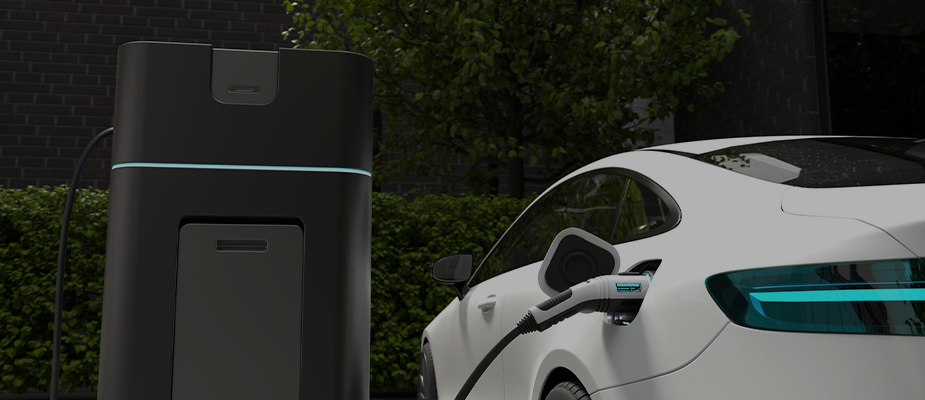
An EV requires significantly more copper than a normal vehicle powered by petrol or diesel. With India’s increasing number of EVs, the supply challenge has become impossible to overlook.
Copper is highly conductive, durable, and reliable, making it one of the most important metals in modern electrical systems. This is why the metal is so widely used in every sector that relies on the energy transition: EV motors, charging stations, solar panels, transformers, and wiring in half of India’s industries. India’s electrification moves this supply question from quantity to sustainability, with recycling addressing this problem and copper recycling plants in Gujarat providing the answers.
EV batteries, motors, wiring harnesses, and chargers require significant quantities of copper by design. The same principle applies to renewable energy production. Copper transmits electrical power efficiently, at a large scale, without failures. Electrification of railway lines requires even more copper. India is presently electrifying over 1,26,000 km of rail tracks, each kilometre requiring copper overhead cables and other equipment.
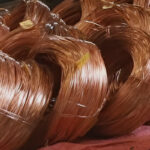
Explore Sunlite’s range of recycled copper products for reliable recycled copper wires.
Domestic mining cannot solve the question alone. India’s copper production is limited to only three copper belts: Singhbhum in Jharkhand, Khetri in Rajasthan, and Malanjkhand in Madhya Pradesh, with the country not keeping pace with its increasing copper demands. India is importing 90-95% of its copper concentrate requirements due to the situation, thus making itself dependent on global prices and complex logistical supply chains. India needs a copper supply that is reliable and local.
Recycling offers the key advantage for copper: unlike many other raw materials, it can be recycled without degradation. Recycled copper retains all its properties from the first production cycle and works without any loss in conductivity or quality. Recycled copper can be returned directly into conductors, wiring, and other electrical components without compromising their quality.
Manufacturing companies have been relying on this fact in their production. Oxygen-free copper rods, produced from recycled copper scrap, can be used in conductors, wiring, and other electrical components without any quality trade-off.
Senior Engineer, Sunlite Recycling Industries, says the following: Recycled copper is not a lesser-grade material, but rather an exact match in performance to the primary copper. In a country like India, rapidly building its EV and renewable infrastructure, this is not an insignificant benefit; it’s the whole point.”
The numbers prove the change as well. Currently, India is using scrap recycling for 20-25% of its domestic copper production, and this share keeps growing due to copper’s status as a critical mineral in India’s resource security framework, which increases government support for recycling and attracts investments in the field. Such a trend allows reducing the pressure on newly mined copper ores, lowering the carbon footprint of the copper supply chain, and reducing the dependency on imports and long-distance transportation.
There is already quite a demand for recycled copper in the state. Gujarat is an industrial leader in the manufacturing of electrical components, infrastructure construction, engineering, and renewable energy generation. This creates a steady demand for recycled copper.
Investments into the state prove the demand as well. Gravita India announced a ₹160 crore copper recycling plant in Mandvi, Gujarat, in mid-2026 with a production capacity of about 29,400 metric tonnes annually and plans to launch operations a year after the announcement. Pricing on the regional scrap market is telling a similar story – copper scrap prices in Gujarat’s Ankleshwar and Jamnagar belt are marginally higher than the national average, caused by the concentration of wire rod mills and secondary smelters in Gujarat.
Manufacturers near a copper recycling plant in Gujarat immediately see the benefits of such a location. They do not have to wait for the material to arrive from other parts of the country or even the world.
Indian power distribution networks, charging infrastructure, industrial electrical systems, and power transmission networks rely on copper conductors inside them. Manufacturers need a reliable supply of such material as the demand keeps rising. Recycling provides that supply.
If the power transmission network, the charger, and the motor all require the same conductor, shouldn’t the supply be equally reliable?
For a deeper look at what’s driving this demand, read Copper Supercycle 2026: Why Copper Manufacturing Company in India Is Entering a Historic Growth Era.
Sustainable energy generation does not only mean increased production but also minimized waste. Copper recycling helps to reuse the material, which would otherwise go to waste. The amount of newly mined copper in India will still matter. However, the ability to reuse the metal India already has may be even more important. A leading copper recycling plant in Gujarat is one of the answers. However, the question is not about India’s ability to mine enough copper. It is about India’s ability to recycle the copper it already has.
Sunlite Recycling Industries turns copper scrap into premium-grade rods, wires, conductors, and earthing solutions, without compromising on purity, conductivity, or supply reliability. Backed by a decade of manufacturing expertise out of Gujarat and a growing footprint across India’s electrification, EV, and renewable energy sectors, Sunlite is built for manufacturers who can’t afford to gamble on supply.
Get in touch with our team to discuss your recycled copper requirements, or explore our full product range.