
-

Survey No. 270A & Plot No. 1 of Survey No. 267, Chhatha Mile, Vill: Dantali – 387350 Ta: Vaso, Dist: Kheda, Gujarat (India)
-

Survey No. 270A & Plot No. 1 of Survey No. 267, Chhatha Mile, Vill: Dantali – 387350 Ta: Vaso, Dist: Kheda, Gujarat (India)
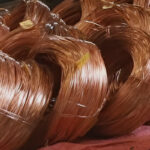
Copper can be recycled repeatedly without losing its core properties, making recycled copper increasingly important to growing demand across electrical, automotive, renewable energy, and infrastructure applications. But when comparing FRHC copper rod suppliers, the real difference often shows up on the factory floor, not on the datasheet.
At Sunlite Recycling Industries, we manufacture Fire Refined High Conductivity (FRHC) copper rods in Kheda, Gujarat, using controlled manufacturing processes and recycled copper scrap. Our production setup includes a German-engineered melting furnace and rolling equipment from established Chinese and Italian manufacturers.
India’s expanding power infrastructure, growing EV adoption, and rising renewable energy projects are driving demand for copper. The International Energy Agency has also highlighted copper’s growing role in electricity networks and clean energy technologies. Supplier selection therefore comes down to more than the lowest price per kilogram. Consistent quality and reliable supply can prevent the downtime, scrap, and production delays that make cheaper material more expensive.
That is why choosing an FRHC rod manufacturer in India should involve more than comparing quotations.
FRHC stands for Fire Refined High Conductivity, referring to copper. Refined to controlled impurity levels while retaining the conductivity and ductility needed for downstream applications.
If you’re already working in wire and cable, transformers, or electrical manufacturing, you know the applications. For everyone else, FRHC copper rods are commonly used for:
As these industries expand in India, so does the need for reliable copper rods.The growing EV sector is one example of where that demand is becoming increasingly important. Read more about why India’s EV revolution needs even more copper and how recycled copper can help bridge the gap.
This is where supplier selection gets interesting.
Purity, conductivity, dimensional accuracy, surface quality, and process control can all influence how a copper rod behaves during downstream manufacturing. And the difference may not appear on the invoice.
It appears later as wire breakage, drawing downtime, rejected material, or inconsistent output. Choosing the best copper manufacturer in India isn’t just about buying copper rods. It’s about choosing a production partner you can rely on for quality, consistency, and supply.
High electrical conductivity helps reduce resistance losses and heat generation while supporting the performance of the finished electrical product.
Every manufacturer will claim strong conductivity.
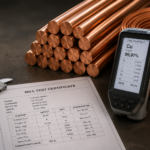
Ask for batch-level test data, not just a standard specification sheet.
The ability to demonstrate consistent results across production batches tells you considerably more about a manufacturer’s process control.
This is the factor that can quietly affect your production costs.
Uniform dimensions, controlled chemical composition, consistent surface quality, and repeatable mechanical properties can help reduce wire breaks and unplanned downtime during drawing.
At high production volumes, even small variations can add up.
A reliable FRHC copper rod manufacturer in Gujarat should be able to demonstrate that consistency isn’t limited to one good batch.
FRHC rod quality is influenced throughout the manufacturing process.
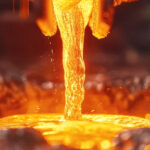
Melting, refining, casting, and rolling all need to work together to produce a consistent finished product. Precision at each stage contributes to dimensional accuracy, surface quality, and repeatable material properties.
At Sunlite, our production setup combines a German-engineered melting furnace with rolling equipment from established Chinese and Italian manufacturers, supporting controlled and repeatable production.
A manufacturer’s quality claims are only useful when they can be demonstrated.
Before selecting a supplier, buyers should ask how the manufacturer checks its copper rods and how those results are documented.
Depending on the application, this can include:
The point isn’t to collect paperwork for its own sake. It’s to establish whether the material you receive consistently matches the material you were promised.
A technically excellent copper rod is of limited value if the supplier cannot maintain your required volumes.
For wire, cable, transformer, and OEM manufacturers, supplier reliability can directly affect production planning.
Before choosing a FRHC rod manufacturer in India, look at more than current availability. Consider production capacity, consistency of supply, lead times, and whether the manufacturer can support your requirements as your volumes grow.
That’s where a long-term manufacturing relationship becomes more valuable than a one-time purchase.
Copper is highly recyclable, and recycled copper can be returned to the manufacturing cycle without losing its fundamental properties when appropriately processed.
Producing copper from recycled material can also require significantly less energy than producing primary copper from mined ore.
For manufacturers, however, sustainability cannot come at the expense of performance.
The important question is whether the manufacturer can combine recycled material with the refining and process controls needed to produce consistent FRHC copper rods.
At Sunlite, our FRHC rod production uses recycled copper scrap as part of a controlled manufacturing process.
For more on our approach to recycled copper, learn about Sunlite’s sustainability initiatives.
FRHC copper rods offer a combination of properties that make them suitable for demanding electrical applications:
These aren’t particularly new advantages. That’s precisely the point.
FRHC copper rod continues to be widely used because these properties remain relevant to modern electrical and industrial manufacturing.
At Sunlite Recycling Industries, we build our FRHC rod production around three priorities: process control, consistent quality, and responsible material sourcing.
Our capabilities include:
You can learn more about Sunlite’s facility, capabilities, and approach on our About Us page.
Raw material price is the easiest number to compare across supplier quotations.
The number that actually hits your P&L is downtime from breakage, scrap from inconsistent batches, delayed deliveries, and rework from rods that don’t perform the way the datasheet promised.
That’s why the cheapest FRHC rod isn’t necessarily the most economical one.
Choosing the right FRHC copper rod manufacturer is a production decision wearing a procurement disguise.